

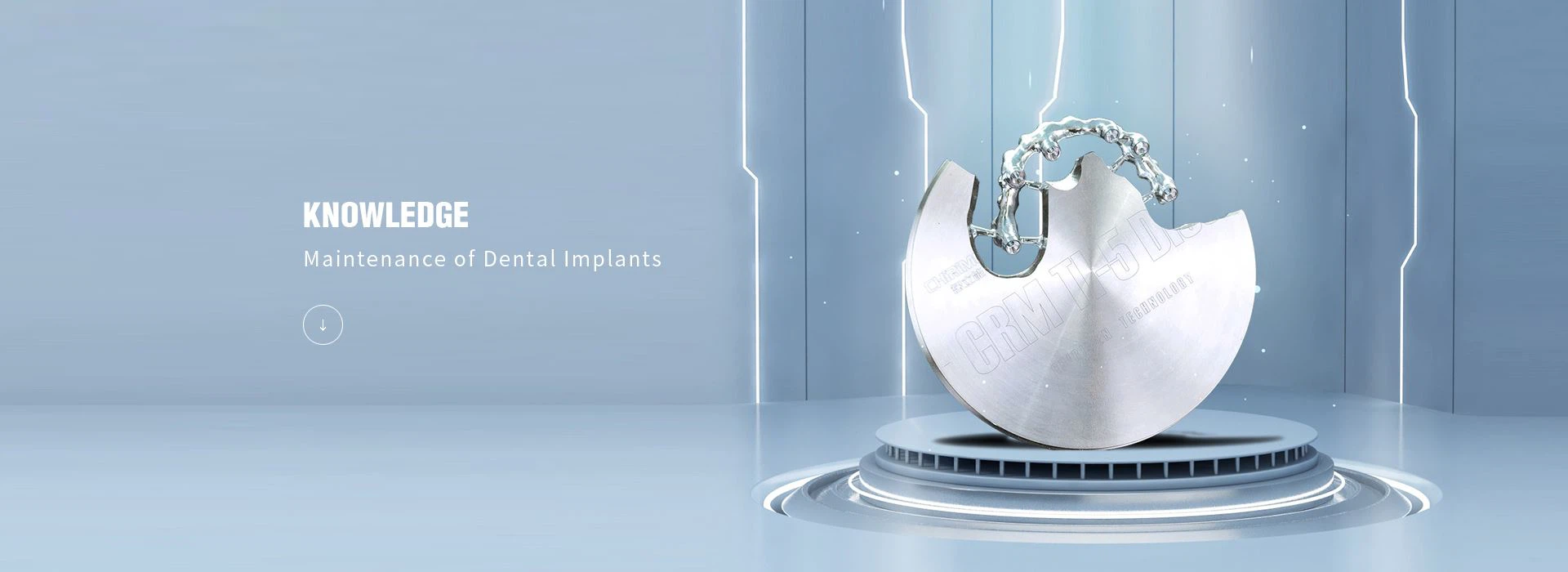
How to choose implant restoration abutment
Apr 21, 2025
Leave a message
Implant Restoration Abutment (hereinafter referred to as "abutment") generally refers to the intermediate structure that connects the dental implant and the prosthesis. The abutment functions similarly to the prepared tooth structure in conventional restorations. It provides support and retention for the prosthesis while also offering anti-rotation and positioning features. The abutment can influence the characteristics of the surrounding soft and hard tissues of the implant site. Selecting an appropriate restoration abutment plays a crucial role in improving implant survival rates and enhancing the aesthetic outcome of the final restoration.
With the rapid advancement of implant dentistry, manufacturers continue to innovate and refine their products. Although the wide variety of abutments can meet diverse clinical needs, they also pose a challenge for clinicians when selecting the most suitable option. However, there is currently limited literature summarizing implant restoration abutments. This article aims to introduce the design objectives, classifications, and selection criteria for abutments to help clinicians make informed decisions.
1. Design Objectives of the Abutment
The ideal design objectives of an abutment include:
A tight connection with the implant to reduce microgaps at the implant-abutment interface and minimize micromovement;
Resistance to rotation for both the abutment and the prosthesis;
Positional accuracy for the abutment and prosthesis;
A shoulder design that harmonizes with the gingival contour to create an ideal transgingival profile;
Facilitation of optimal occlusal force transmission and distribution;
Ease of clinical handling and maintenance of the implant/prosthesis.
2. Types of Implant Abutments
Based on manufacturing methods, abutments can be classified into prefabricated abutments and custom abutments.
2.1 Prefabricated Abutments
Prefabricated abutments are ready-made products designed by manufacturers for convenient clinical application. Common types include aesthetic abutments, adjustable abutments, gold abutments, ball abutments, Locator® abutments, and hybrid abutments.
2.1.1 Aesthetic Abutments
These mimic the natural gingival contour, with a higher lingual collar compared to the labial side, helping to reduce metal exposure. They are mainly used in the anterior region due to their aesthetic advantages.
2.1.2 Adjustable Abutments
These can be adjusted chairside to fit the patient's edentulous space. They are convenient for clinicians and technicians during the final prosthesis fabrication. They are often used in the premolar and molar areas.
2.1.3 Gold Abutments
Known for excellent mechanical properties, they are suitable for cases with limited occlusal space. Based on rotational resistance, they are divided into anti-rotational and non-anti-rotational types. Anti-rotational abutments are mainly used for single-tooth or cement-retained multi-unit restorations, while non-anti-rotational types are used for screw-retained multi-unit restorations.
2.1.4 Ball and Locator® Abutments
Commonly used for overdentures. The transmucosal height should exceed the surrounding gingival level, with Locator® abutments typically requiring 1.5 mm above the gingiva.
2.1.5 Hybrid Abutments
These include straight and angled versions, depending on their axis relative to the implant. Angled abutments help achieve a common path of insertion for multiple implants and are often used in bridge restorations. They can also serve as platforms for better prosthesis placement.
While prefabricated abutments are cost-effective and versatile, they do have limitations. Their standard transmucosal height and contour may not fit the patient's soft tissue well, and their fixed height and width restrict use in cases with abnormal interarch or mesiodistal spacing.
2.2 Custom Abutments
Custom abutments are tailored to the specific implant position, gingival morphology, and edentulous space. They include cylindrical abutments and CAD/CAM abutments.
Cylindrical abutments allow implant-level restorations and can be shaped by the clinician.
CAD/CAM abutments are designed and manufactured using computer-aided design and manufacturing technology. After analyzing digital model data, the abutment shoulder is precisely milled from materials such as titanium alloy or zirconia. CAD/CAM abutments offer high precision, good transgingival form, lower cost, and shorter production time, making them a popular choice for restorations in aesthetic zones[^5].
3. Selection Criteria
When choosing from the many available abutments, clinicians should consider the patient's specific intraoral conditions. Key selection criteria are summarized below:
3.1 Compatibility and Connection with Implant
Abutments connect to implants in various ways, and different systems have unique interfaces. For example, Straumann uses a cross-fit connection, NobelActive uses an internal conical hex, and Bicon uses a Morse taper. The selected abutment must match the implant's platform precisely to ensure tight fit, strong retention, and minimal microgap, which are essential for long-term success. Today, internal connections using platform-switching techniques (e.g., Morse taper or tapered screw connections) are common. Since the implant's platform dictates the connection type, this should be considered during surgical planning.
3.2 Abutment Selection Based on Implant Position
Abutment choice should reflect the implant's spatial position and its relationship to adjacent crowns.
Ideal position: Prefabricated abutments may suffice, offering good results at lower cost.
Malpositioned implants (e.g., too buccal or lingual): Custom abutments are needed to compensate for the deviation.
If the implant axis is off-angle, it affects whether screw or cement retention is used, as well as the necessity for angled abutments. For example, if the screw access hole opens on the labial side in aesthetic zones, a cement-retained abutment is preferred. Angled abutments (e.g., 17° or 30° in "All-on-Four" cases) can correct moderate implant angulation. Although angled abutments increase lateral stress, studies show this remains within physiological limits. Caution is advised when using them.
3.3 Based on Soft Tissue Morphology
This includes the soft tissue thickness and contour above the implant platform.
Select a transmucosal height that suits the tissue thickness for hygiene and aesthetics.
In aesthetic zones, the prosthetic margin should lie 1–2 mm subgingivally. In less visible areas, a supragingival margin may suffice.
Custom abutments can replicate the gingival contour precisely, creating an ideal emergence profile. Standard abutments with a suitable cervical diameter may also maintain good soft tissue shape.
3.4 Based on Prosthetic Space
The prosthetic space includes the interarch and mesiodistal dimensions. The combined space required for the abutment and final restoration must be considered. Adequate clearance (1.5–2.0 mm above the abutment) is needed for restorative material. In cases with long-term tooth loss, adjacent teeth may tilt, creating uneven spacing (narrow at top, wide at bottom). It's essential to assess whether there's sufficient space between the abutment and adjacent teeth.
3.5 Based on Type of Restoration
Implant restorations can be generally categorized into implant-supported and implant-mucosa-supported restorations