


The Reason of Dental Implant Loosening
May 18, 2023
Leave a message
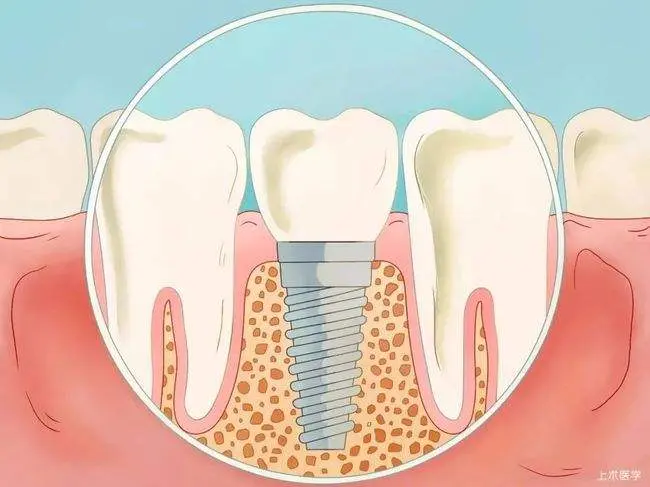
Dental implants have a good effect and a high success rate. It can be said that it is indeed the most effective restoration method for teeth. However, there are also patients who report that the implants become loose after a period of time. So, today I am here to explain to you what is the reason for the loosening of the implants and why this phenomenon occurs.
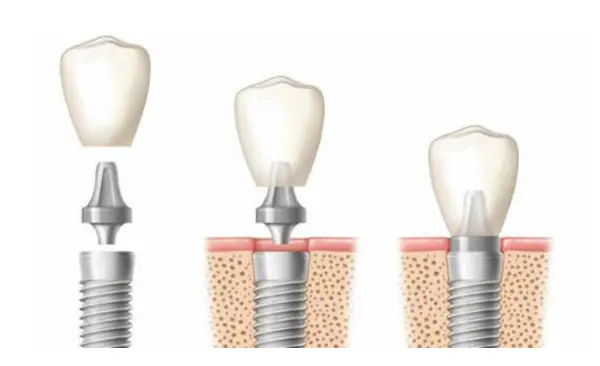
Dental implants consist of three parts: the implant, the abutment and the crown. Implants and bone are osseointegrated, very strong, and loosening rarely occurs. If loosening occurs unfortunately, it is usually because of the following points.
Loose Crown
The abutment is an important part connecting the implant and the crown, which is fixed by the central screw. As a safety guarantee component, the central screw performs the function of air-opening insurance. The occlusal pressure is controlled by the torque added to the central screw.
When the occlusal pressure is too large, the central screw will loosen, so as to protect the implant part as the tooth root from breaking due to excessive occlusal load. If there is looseness, you only need to return to the doctor in time to fix the central screw again. It must not be left alone, causing secondary injuries leading to unmanageable consequences such as screw breakage or implant breakage.
Implant Loosening
The lack of osseointegration between the implant and its surrounding bone bed can lead to implant loosening. Implants that have loosened should be removed. After removal, if there are enough other implants remaining to support the denture, no further implants are necessary. If there is sufficient bone in the implant area, large-diameter implants can also be used for immediate in situ implantation, but attention should be paid to the risk assessment.
The connection between the abutment and the implant is loose
The connection between the abutment and the implant is loose, usually because the screws loosen after long-term use. At this time, the treatment is relatively simple. You can unscrew the screws and replace them. If there is no problem with the screws, just tighten them again.
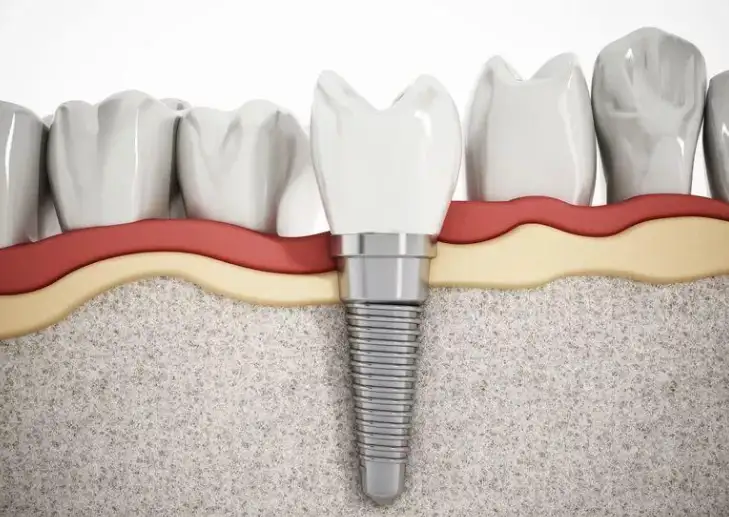
The reason for the above situation is not because of the problem of the dental implant technology itself, but a large part of the reason is caused by the improper maintenance of the patient during the postoperative use.
First of all, the internal phenomenon of each person's oral cavity is different, and the absorption state of the alveolar bone in the missing tooth is also different. Therefore, before implanting a dental implant, it is necessary to design a dental implant that perfectly fits the patient's mouth. If the design of the implant is unreasonable and the precision of the implant is required during manufacture, it will cause some parts to be overloaded, and the bone around the implant will be slightly broken, resulting in the loosening of the implant.
Poor oral or general conditions of the patient, such as too thin gums or poorly controlled periodontitis, poor chewing habits, and prolonged smoking may lead to peri-implantitis and implant failure.
Secondly, many people think that everything will be fine only with dental implants installed, and it is wrong to bite all kinds of hard objects recklessly. No matter how good the implant is, you should not bite hard objects at will, which will not only damage the crown, but also cause the implant to loosen, especially in the initial stage of the implant.
In addition, we learned that the reason for the loosening of dental implants is closely related to the use of hospitals and patients, and professional and regular hospitals should be selected for dental implants.
1. During the operation, there is no good cooling water to cool down, and the temperature cannot be controlled below 47°C. The high temperature for a long time will cause the death of bone cells, so that bone healing cannot be formed. Early fretting prevents bone union from forming.
2. The operation was not strictly followed the principles of implant surgery, and the surgical trauma was too large or the periosteum was perforated during the healing stage, resulting in poor healing.
3. The design of the dental implant restoration is unreasonable, and the required precision cannot be achieved during the production, resulting in local overload, resulting in fine fractures of the bone around the implant, or the restoration is not accurate enough, and there will be a greater stress after the restoration is completed On implants, bone resorption occurs, and persistent gingivitis, peri-implantitis, and uneven distribution of occlusal force may also lead to progressive bone resorption at the implant site.